Electronic Team uses cookies to personalize your experience on our website. By continuing to use this site, you agree to our cookie policy. Click here to learn more.



USB dongles occupy a physical port. Most computers do not have enough ports to support workflows requiring multiple dongles.

Virtual sessions in RDP, VMware, and Hyper-V have no native path to a dongle on the host and cannot run installed, protected software.

Users risk loss, damage, and lost productivity when they need to share a dongle physically. Replacing the security key may be a time-consuming and expensive process.

Remote workers and distributed teams may need a dongle that is physically located elsewhere, which can lead to lost productivity.
|
Method
|
How it works
|
Best for
|
|---|---|---|
| Account-based | Both computers use the same Donglify account and credentials to see each other's shared dongles automatically. | Internal team members |
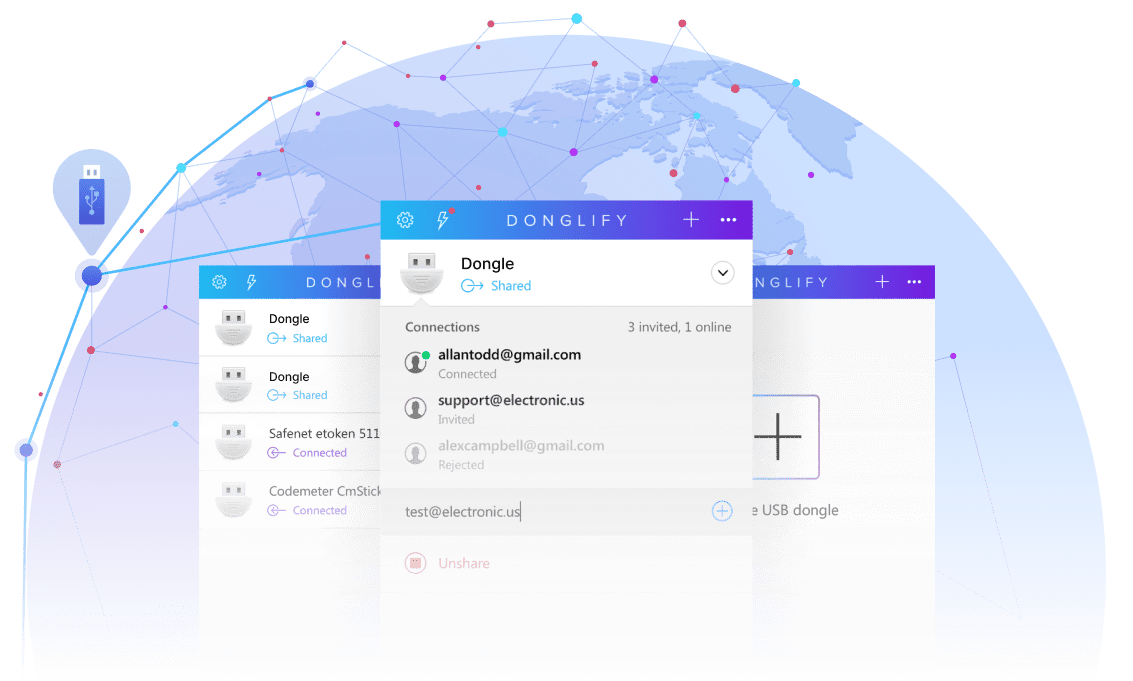
| Invitation-based | You can send an email invite to another Donglify account so they can connect to a shared dongle without your credentials. | Trusted contractors and partners |
| Token-based | Users can generate a login token that grants access to your account's shared dongles. Anyone can use the token for temporary device access. | Client demos, limited trials, and access by external teams. |